 Glenhaven Siding
 Building a Deck That Holds Up in Sudden Valley
Sudden Valley sits in a part of Whatcom County where trees, water, and weather all work against a deck at the same time. Homes here are often shaded by mature fir and cedar, sit close to the moisture coming off the water, and see long stretches of gray, wet weather every year. A deck built with generic, one-size-fits-all methods will show it within a few seasons — soft spots, black streaks, spongy stair treads, and a slick green film that shows up every fall and doesn't fully leave until late spring. A deck built correctly for this specific setting is a different story: it stays solid, drains properly, and doesn't turn into a slip hazard every time it rains.
This page is about one project type, in one place: custom deck construction for homes in and around Sudden Valley. We're not going to give you a generic national deck-building overview — we're going to explain what actually matters for a deck built in this microclimate, what a correct build involves, and how we run the job from first call to final walkthrough.
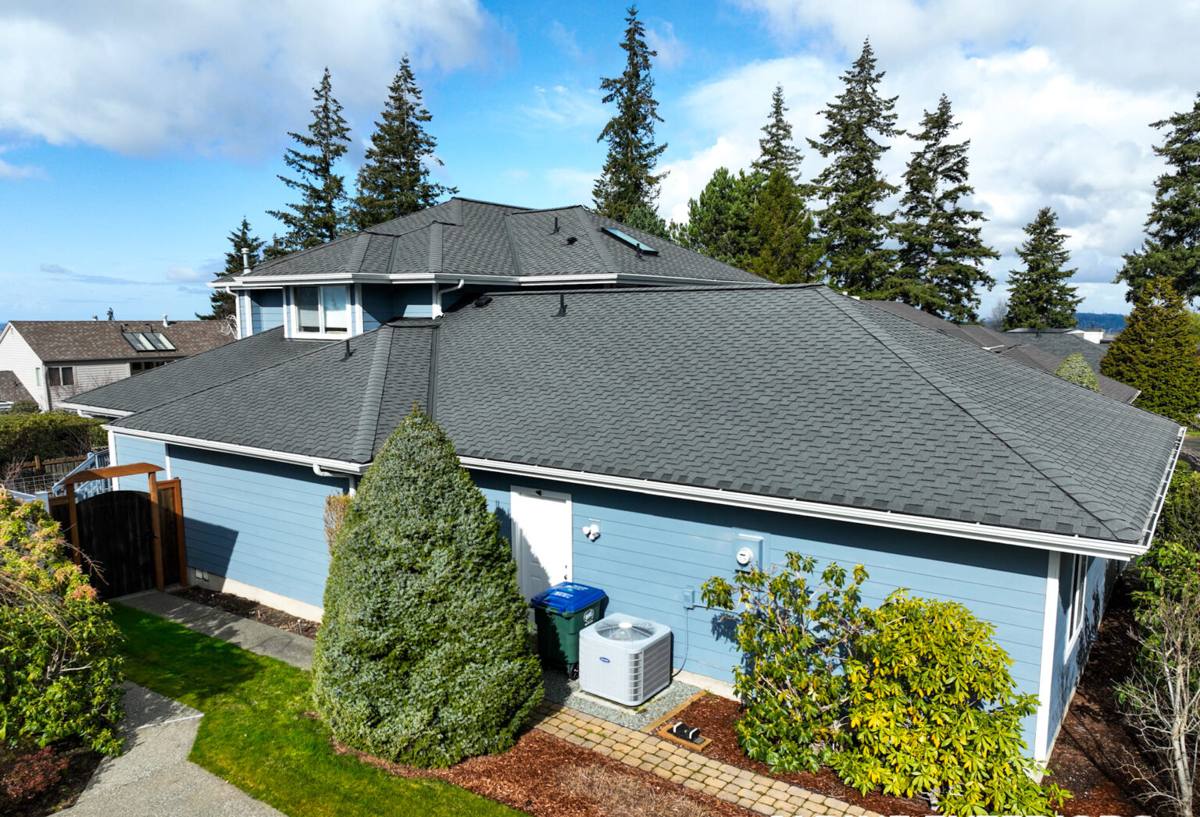
What Damp, Shaded Conditions Do to an Ordinary Deck
Whatcom County's mix of lake-effect moisture, coastal air, and long wet seasons is hard on any exterior structure, but decks take a particular kind of abuse because they're horizontal — every board is a place for water to sit instead of run off. Add tree cover, which is common throughout Sudden Valley, and you get slower drying times, more standing moisture, and a longer moss season than you'd see on an open, sun-exposed lot.
What happens to untreated or poorly built wood decks
Standard dimensional lumber that isn't properly sealed, spaced, and ventilated underneath will start absorbing water at the end grain and around fasteners first. Over a few wet seasons that shows up as graying, splitting, and soft or spongy spots — usually starting at stair stringers, ledger boards, and anywhere two boards meet tight with no gap for water to escape.
What happens to composite and PVC decking installed the wrong way
Composite and PVC boards resist rot, but they're not immune to problems if the substructure underneath isn't built for drainage and airflow. Trapped moisture under composite decking breeds mold and mildew just like it does on wood — it just doesn't rot the boards themselves. Homeowners are often surprised that a "maintenance-free" deck can still grow moss and black streaks if the framing underneath doesn't let air move and water drain.
What a Correctly Built Deck Involves Here
A deck that's going to hold up to a Whatcom County winter — and the moss season that follows it — needs a handful of details done right from the ground up. These aren't upgrades; they're the baseline for a deck that won't need major repair inside ten years.
- Footings sized and set below frost depth, on soil that's been checked for drainage rather than assumed
- Ledger board flashing that properly sheds water away from the house rim joist — this is the single most common failure point on older decks
- Joist tape or a comparable moisture barrier on top of every joist, so fasteners don't create a path for water into the wood
- Consistent board spacing that lets water drain through rather than pool on the surface
- Corrosion-resistant, code-rated fasteners and hardware throughout — not just at visible connection points
- Airflow underneath the deck, especially on lower decks close to grade, so the framing can actually dry out between rain events
None of this is exotic. It's standard good practice — but it's exactly the kind of detail that gets skipped on a rushed build, and it's the difference between a deck that needs a repair call in year four and one that doesn't need real attention for fifteen or twenty years.
Choosing Decking Material for Sudden Valley Conditions
There's no single "best" decking material for every home — it depends on your budget, how much sun the deck gets, and how much upkeep you actually want to do. Here's how the common options compare specifically for shaded, damp lots like the ones common around Sudden Valley.
| Material | How it handles shade and moisture | Maintenance | General cost position |
|---|---|---|---|
| Pressure-treated wood | Needs sealing and regular cleaning to resist moss and rot in shaded areas | Highest — annual cleaning and periodic re-sealing | Lowest upfront cost |
| Cedar | Naturally moisture- and insect-resistant, but still grays and can grow moss without upkeep | Moderate to high — sealing recommended every 1-2 years | Mid-range |
| Composite decking | Resists rot but can still grow surface mildew and moss in low-sun areas if not cleaned | Low — occasional washing, no sealing or staining | Higher upfront, lower long-term labor |
| PVC/capped polymer decking | Best moisture resistance of the group; least affected by standing damp conditions | Lowest — surface cleaning only | Highest upfront cost |
For heavily shaded lots — which describes a good number of properties around Sudden Valley given the tree cover — we generally steer homeowners away from bare pressure-treated wood as a standalone surface unless they're genuinely willing to clean and reseal it on a schedule. It's not that the material is bad; it's that it demands the most consistent upkeep in exactly the conditions where upkeep gets skipped. Composite and PVC options trade a higher material cost for a lot less of that ongoing labor.
Our Process, Start to Finish
We run every custom deck project the same structured way, whether it's a small platform off a back door or a full multi-level deck with stairs and built-in railings.
- On-site assessment. We walk the actual lot, check grade, drainage, sun exposure, and how the deck will tie into the house before we talk materials or layout.
- Design and material selection. We go over layout options and material trade-offs in plain terms — including the maintenance conversation above — so you're choosing based on what you actually want to deal with long-term.
- Permitting. Most decks above a certain height or attached to the house require a permit through Whatcom County. We handle that process rather than leaving it on you.
- Site prep and footings. Footings are dug and set to proper frost depth before any framing goes in.
- Framing and flashing. This is where the moisture-management details above — ledger flashing, joist tape, fastener selection — get built in, not added later.
- Decking, railing, and stairs. Boards, railings, and stair systems are installed to code and to the spacing tolerances that keep water draining properly.
- Final walkthrough. We go over the finished deck with you, including basic care guidance specific to the material you chose.
Railings, Stairs, and Local Code
Whatcom County follows the state building code for residential decks, which sets specific requirements for railing height, baluster spacing, stair rise and run, and guardrail load capacity — particularly once a deck sits above a certain height off grade. These aren't optional details or aesthetic choices; they're inspected. We design railings and stairs to meet code from the start rather than treating it as a checklist item at the end, which avoids the rework and re-inspection delays that come from a design that has to be corrected after the fact.
Stairs deserve particular attention in a climate like this one. A stair tread that's fine in dry weather can become genuinely dangerous once moss or algae builds up on it during the wet months. We factor tread material, spacing, and in some cases surface texture into stair design specifically to reduce that risk, rather than treating stairs as just a smaller version of the deck surface.
Keeping Moss and Mildew Off a New Deck
Even a correctly built deck will get some moss and algae growth in a climate this wet and shaded — the goal of good construction is to make that growth a surface-level cleaning issue, not a structural one. A little seasonal upkeep goes a long way toward keeping a new deck looking and performing the way it did on day one.
- Sweep leaves and needles off the deck surface regularly in fall — trapped organic debris holds moisture and speeds up moss growth
- Rinse or lightly scrub the surface a couple of times a year, especially shaded sections, before moss gets a foothold
- Keep gutters and downspouts near the deck clear so runoff isn't dumping extra water onto the deck surface
- Trim back overhanging branches where practical to let more light and air reach the deck
- Check that drainage gaps between boards stay clear of debris rather than packing solid over time
- For wood and cedar decks, keep to a sealing schedule rather than waiting until graying or moss is already visible
None of this is heavy labor — it's the kind of basic seasonal maintenance that, combined with a properly built substructure, keeps a deck performing for decades instead of years.
Why Hire a Crew That Already Works Sudden Valley
A deck built to a generic spec sheet can look fine on the day it's finished. What separates a deck that's still solid in fifteen years from one that needs major repair in five usually isn't the decking material — it's whether the crew that built it actually accounted for the site conditions: the shade pattern, the drainage, the moss season, the way water moves across that particular lot. That's the kind of judgment that comes from having worked on homes in this specific area before, not from following a national installation manual.
We also think it matters that the same company handling your deck understands how it interacts with the rest of your home's exterior — siding, trim, and drainage all affect and get affected by a deck built against the house. Treating the deck as an isolated project, disconnected from how water actually moves around your home, is how ledger board leaks and hidden rot end up happening in the first place.
Get a Free, No-Pressure Estimate
If you're planning a new deck or replacing one that's showing its age in Sudden Valley, we're happy to come take a look, walk you through material options honestly, and give you a straightforward estimate — no pressure, no upsell script. Use the form below to get started.