 Glenhaven Siding
 Why Decks Take a Beating in Whatcom Falls
Whatcom Falls sits in a part of Whatcom County where three things work against an outdoor deck at the same time: salt-tinged air moving in off the water, long stretches of driving rain in fall and winter, and a moss season that can run from October well into spring on shaded lots. None of these are dramatic on their own. Together, over a few seasons, they're what turns a deck that looked fine at installation into one with soft spots, discolored boards, and a slick, green surface by the time the days start getting shorter again.
A deck built for a drier climate, or built without much thought to drainage and airflow underneath, will show its age here faster than it should. That's the case for composite decking specifically in this area — it's not a universal fix, but done right it holds up to this particular combination of moisture and shade far better than untreated or minimally treated wood does.
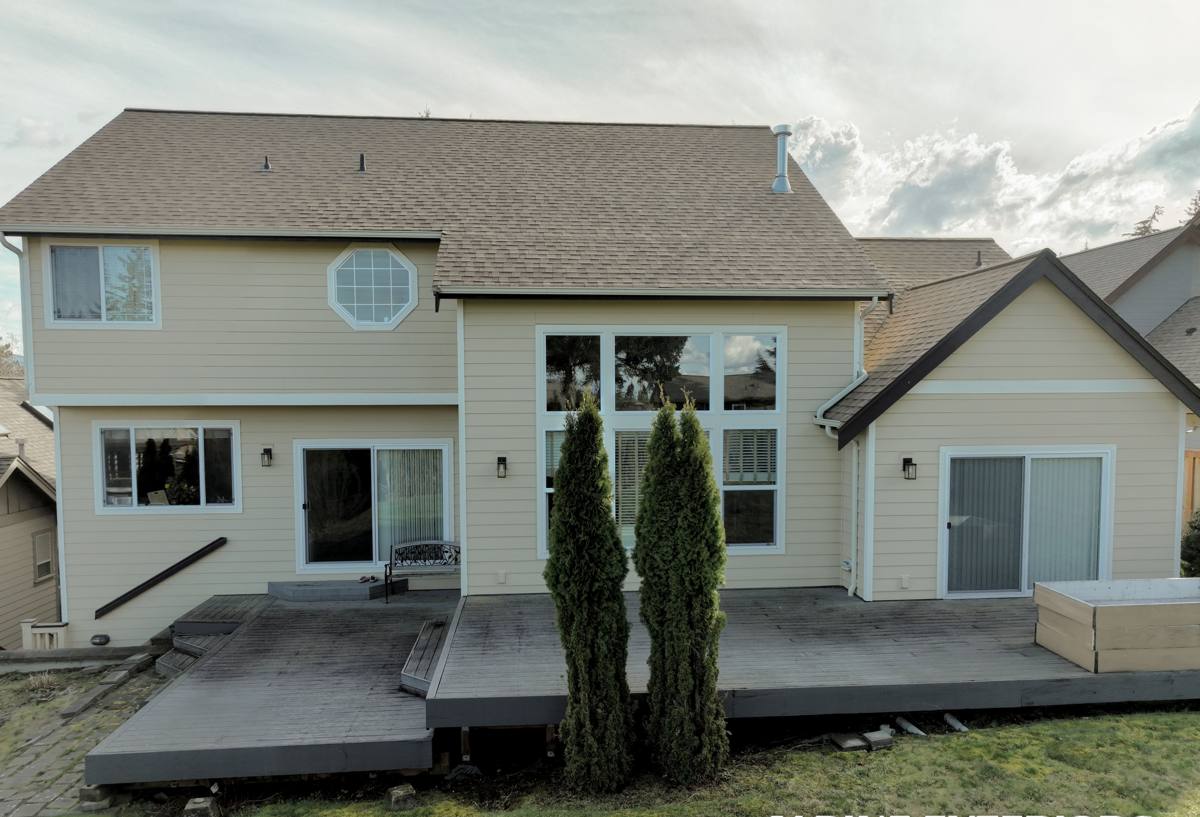
What Composite Decking Actually Needs to Handle Here
Moisture that doesn't dry out fast
In a lot of the country, decks get wet and then get a stretch of sun and wind to dry back out. Whatcom Falls doesn't always offer that stretch. Boards, joists, and especially the ledger board where the deck meets the house can stay damp for days at a time during the wet months. Composite board itself resists rot, but the framing underneath it, the fasteners, and the flashing details still need to be built assuming they'll be wet more often than dry for half the year.
Shade and moss, not just rain
A lot of Whatcom Falls lots have mature tree cover, which is part of the appeal of living here — but shade plus moisture is exactly what moss and algae need to take hold. Decking that traps water against its underside, or that's installed too tight to the ground or a foundation wall, gives moss a head start. The surface texture of the board, the gap spacing between boards, and the ventilation under the whole structure all matter more here than they would on an open, sunny lot.
Salt air and hardware
Being close enough to the water to get salt-laden air means fasteners, brackets, and any exposed metal need to be rated for it. Standard hardware can start showing corrosion within a few years in this environment; the wrong screws are usually the first thing to fail on an otherwise sound deck.
Composite vs. the Alternatives, Honestly
We install composite decking because, for most Whatcom Falls homeowners, it's the best balance of upfront cost, appearance, and long-term maintenance for this climate — not because every other material is bad. Here's how the honest trade-offs break down:
| Material | How it handles wet shade | Maintenance | Typical lifespan here |
|---|---|---|---|
| Untreated or basic pressure-treated wood | Absorbs moisture, prone to rot and splintering in constant damp shade | Annual sealing/staining recommended | 10-15 years with upkeep |
| Cedar | Naturally rot-resistant but still absorbs water; moss grows readily on untreated surfaces | Regular cleaning and refinishing | 15-20 years with diligent care |
| Composite (capped) | Shrugs off moisture at the surface; won't rot from the inside | Periodic washing to stay ahead of surface moss/algae | 25-30+ years, manufacturer-warrantied |
| PVC/vinyl decking | Fully moisture-proof but can look and feel less like natural wood | Low; occasional washing | 25-30+ years |
Composite's main trade-off is upfront cost compared to basic wood, and the fact that installation quality matters more — a poorly installed composite deck can trap moisture underneath just as badly as a poorly installed wood one. That's a labor and design issue, not a material flaw, and it's exactly what a careful install process is meant to prevent.
What a Correct Composite Deck Install Involves
The board itself is the part homeowners see, but it's the least likely part to fail. Almost every deck problem we get called out to repair in this area traces back to what's underneath or how it was fastened, not the decking material choice. A correct job means:
- Joists and framing rated and treated for sustained damp conditions, not just splash exposure
- Proper joist spacing for the specific composite product being used — composite often needs tighter spacing than wood
- Flashing at the ledger board that actually sheds water away from the house, not just a bead of caulk
- Corrosion-resistant fasteners and hardware suited to salt-air exposure
- Consistent board gapping for drainage and airflow, not tightened up for looks at the expense of function
- Ground clearance and skirting that allows air to move underneath the deck instead of trapping moisture and shade
- Hidden fastener systems installed to the manufacturer's spec, since incorrect fastening is one of the most common warranty-voiding mistakes
Our Process for a Whatcom Falls Composite Deck
- Site walk and assessment. We look at sun/shade exposure, existing drainage patterns, proximity to salt air, and the condition of any existing structure before quoting anything.
- Design for this lot, not a generic layout. Board direction, gapping, and ventilation get planned around how water actually moves across your specific yard and how much shade the deck sits in.
- Framing and structural work. This is where we spend the time other crews sometimes rush — proper joist spacing, treated or corrosion-resistant framing hardware, and flashing done right the first time.
- Composite installation. Boards go down to the manufacturer's fastening spec, with consistent gapping for drainage and airflow underneath.
- Finish details. Fascia, stairs, railing, and skirting are installed to keep airflow moving underneath rather than sealing the space off and inviting moss growth.
- Walkthrough. We go over basic care with you before we leave — what to expect from the material in this climate and what routine cleaning actually needs to look like.
Living With a Composite Deck Through a Long Moss Season
Composite doesn't rot, but it isn't immune to surface growth — moss, algae, and mildew can still take hold on the surface of any decking material if it stays damp and shaded long enough, composite included. The difference is that on a properly installed composite deck, that growth stays cosmetic and washes off; it doesn't work its way into the board or the structure underneath the way it can with wood. A seasonal rinse with a garden hose and, where growth has set in, a soft-bristle brush and a composite-safe cleaner is typically all it takes. Avoid pressure washing at close range or with too much force — it can etch the surface of some composite products and void the warranty. If you're not sure what your specific board can handle, check the manufacturer's care guidance before using anything stronger than a hose.
What Affects the Cost of a Composite Deck Here
| Factor | Why it matters in Whatcom Falls |
|---|---|
| Deck size and shape | More cuts, seams, and framing on multi-level or irregular layouts |
| Height above grade | Taller decks need more substantial framing and often stairs/railing |
| Ledger and flashing work | Correct flashing against a house takes more time but prevents the most common failure point |
| Fastener and hardware grade | Corrosion-resistant hardware for salt-air exposure costs more than standard-grade fasteners |
| Board tier | Capped composite and PVC-composite hybrids cost more upfront than base-tier composite but need less long-term attention |
| Site access and existing structure removal | Tree cover, slope, and tear-out of an old deck all add labor time |
We'll walk through these specifics for your property during an estimate rather than quoting off a generic per-square-foot number — a shaded, sloped Whatcom Falls lot and an open, level one aren't the same job even at the same square footage.
Why It Matters That We Already Work This Neighborhood
There's a real difference between a crew that installs decks in general and one that regularly works in Whatcom Falls specifically. We already know which parts of the neighborhood sit in near-constant shade, where salt exposure tends to be more of a factor, and which drainage patterns show up again and again on lots here. That means fewer surprises mid-project and a design that's already accounting for this area's specific mix of rain, shade, and moss rather than a one-size-fits-all approach brought in from a drier or more open part of Whatcom County.
If you're weighing composite decking for a home in Whatcom Falls, we're happy to walk your property, look at your sun and drainage conditions, and give you a straight answer on what a correctly built deck would involve and cost. Use the form below to request a free, no-pressure estimate.