 Glenhaven Siding
 Deck Repair Built Around Whatcom Falls' Marine Climate
A deck in Whatcom Falls doesn't age the way a deck does in a dry inland climate. Homes in this part of Glenhaven deal with salt-laden marine air, long stretches of driving rain, and a moss season that can stretch from late fall well into spring. Individually, none of those is unusual for Whatcom County. Together, applied year after year to the same fastener heads, ledger boards, and joist tops, they cause a specific and fairly predictable set of failures. A repair that doesn't account for all three tends to fail again within a couple of seasons.
This page covers deck repair specifically — what typically goes wrong on decks in this area, what a correct repair actually involves, and how we approach the job so the fix holds up rather than becoming a recurring line item.
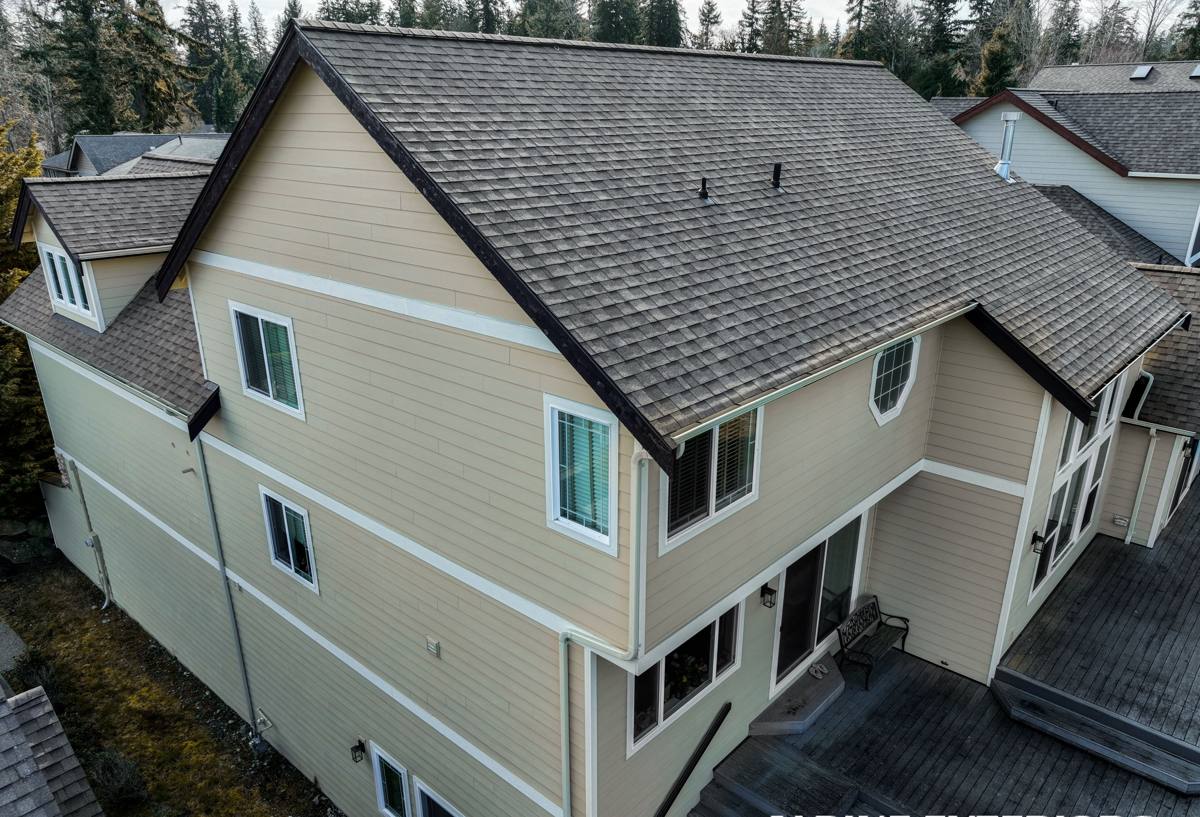
Warning Signs Your Deck Needs Repair
Most deck failures don't announce themselves with a collapse. They show up as small, specific symptoms that are easy to dismiss until they aren't. If you're seeing any of the following, it's worth having it looked at before the next wet season:
- Boards that feel soft, spongy, or slightly bouncy underfoot, especially near the house or along the perimeter
- Rust streaks bleeding down from screw or nail heads onto the decking
- A gap or dark staining where the deck meets the house at the ledger board
- Railings or stair stringers that wobble or flex when you lean on them
- Green or black film building up in shaded corners or between deck boards that never fully dries
- Visible splitting, cupping, or checking in the boards, particularly on the sun-and-rain-exposed side
None of these mean the whole structure is compromised. Most of them are localized problems that, caught early, are straightforward repairs. Ignored, they spread into the framing underneath, which is where repair costs jump.
What Salt Air, Rain, and Moss Actually Do to a Deck
Wood Decking and Framing
Untreated or poorly sealed wood absorbs moisture at end grain, screw holes, and anywhere the finish has worn thin. In a climate with this much sustained rain, that moisture doesn't get a long dry spell to fully evacuate before the next storm arrives. The result is slow rot that starts from the inside of a board or joist and isn't obvious until the surface finish has already failed. Moss compounds this — it holds moisture directly against the wood surface and keeps that section damp far longer than open, sun-exposed decking.
Fasteners and Hardware
Salt air accelerates corrosion in any fastener or hardware that isn't rated for a coastal-adjacent environment. Standard galvanized screws and joist hardware can start rusting from the inside of the hole outward, which means the fastener can be losing holding strength well before you see a rust stain on the surface. This is one of the most common reasons a deck that "looks fine" on top has loose railings or soft spots at the frame.
Composite and Engineered Decking
Composite decking resists rot, but it isn't immune to problems in this climate. Moss and algae still grow on composite surfaces in shaded, damp areas, and the fasteners, joists, and ledger connections underneath a composite deck are still ordinary wood and metal unless upgraded — meaning the substructure can be failing even while the visible decking looks new. A repair on a composite deck often means addressing what's underneath, not the boards themselves.
Our Deck Repair Process
Inspection Before Estimate
We start under the deck, not on top of it. That means checking ledger board attachment and flashing, probing joists and beams for soft spots, and checking post bases and footings for movement or rot at ground contact. Surface problems get evaluated too, but the structural check comes first because it determines whether a repair is even the right call.
Fix the Structure, Then the Surface
We don't replace decking boards over a joist that's compromised, and we don't re-face a ledger connection without checking the flashing behind it. Repairing visible damage without addressing what caused it just buys a year or two before the same symptom returns.
Matching Materials and Finish
Where boards, rail sections, or stair parts need replacing, we match species, profile, and finish as closely as the original construction allows so the repair doesn't stand out as an obvious patch. Fasteners and hardware get upgraded to corrosion-resistant options appropriate for this area regardless of what was originally used, since that's usually cheap insurance against the exact failure that caused the original repair.
Repair or Replace? What Actually Determines the Answer
Homeowners often assume any deck problem means a full rebuild. Just as often, we see decks torn out that only needed targeted repair. The honest answer depends on a few specific factors:
| Factor | Leans Toward Repair | Leans Toward Replacement |
|---|---|---|
| Framing condition | Joists and beams are solid; problem is isolated to a few boards or connections | Rot has spread through multiple joists or the ledger board itself |
| Age of structure | Deck is under 15-20 years old with one clear failure point | Original construction is at or past its expected service life |
| Footings and posts | Footings are stable, posts are sound at ground contact | Footings have shifted or posts show rot at the base |
| Scope of damage | Damage is localized (one stair, one rail section, a few boards) | Damage is spread evenly across the whole deck surface |
| Code and layout | Current layout and railing height already meet code | Structure predates current guardrail, stair, or footing requirements |
We'll give you a straight answer on which side of this table your deck falls on, including the cases where a partial repair now makes sense with a plan to replace specific sections down the road.
Structural Repairs We Take Seriously
Ledger Board and Flashing
The ledger board — where the deck attaches to the house — is the single most common source of serious structural failure, and it's also the hardest to inspect without pulling decking or siding back. Failed or missing flashing lets water track behind the ledger and into the rim joist of the house itself, which turns a deck repair into a house repair if it goes unaddressed long enough. Any deck repair we do near the house includes a real check of this connection, not a glance.
Posts, Footings, and Joists
Posts that sit in or near standing water, and footings that have shifted with seasonal ground saturation, are structural issues regardless of how solid the decking above looks. We check for movement, not just visible rot, since a post can still look intact while no longer bearing load the way it should.
Surface, Railing, and Stair Repairs
Not every repair is structural. Surface-level work still matters for safety and longevity, and it's usually more affordable than homeowners expect once the structural check comes back clean:
- Replacing individual boards showing rot, splitting, or persistent moss staining
- Re-securing or replacing loose, rotted, or improperly spaced railing balusters
- Rebuilding stair stringers that have softened at ground contact
- Re-flashing or resealing board edges and fastener holes to slow future moisture intake
- Sanding and refinishing wood surfaces where the original coating has worn through
These repairs are worth doing properly the first time. A railing baluster reattached with the wrong fastener, or a board resealed without addressing the moisture source underneath, tends to fail again in roughly the same timeframe as the original problem.
Keeping a Repaired Deck Healthy Through Moss Season
A repair holds up longer with a small amount of seasonal upkeep, especially given how long moss season runs in this part of Whatcom County. After a repair, we recommend homeowners keep an eye on the following:
- Sweep debris and standing leaves off the deck surface before fall rains set in, especially in shaded corners
- Rinse or brush off moss and algae buildup before it has a chance to hold moisture against the boards long-term
- Check that gutters and downspouts near the deck are directing water away rather than onto the deck surface or posts
- Look at fastener heads once a year for early rust bleed, which is often the first visible sign of a developing problem
- Reapply sealant or finish on wood decking on the schedule the product calls for — marine air shortens the effective life of most exterior finishes
Why a Crew That Already Works Whatcom Falls Makes a Difference
Deck repair done right requires knowing what's normal for this specific environment versus what's a red flag. A crew that regularly works Whatcom Falls and the surrounding Glenhaven area has already seen how quickly moss reestablishes in the shaded, damp corners typical of local lots, which fastener types actually hold up against the marine air here, and where ledger and flashing failures tend to show up first on homes built to older code. That local pattern recognition shortens the inspection, sharpens the estimate, and avoids the generic fixes that don't account for this climate.
If your deck is showing any of the signs above, we're happy to take a look. We provide free, no-pressure estimates and will tell you honestly whether you're looking at a repair or something more, using the form below to get started.