 Glenhaven Siding
 Siding Installation Built for Whatcom Falls Conditions
Whatcom Falls homes sit in one of the more demanding siding environments in Glenhaven. The combination of salt-laden air moving in from Puget Sound, wind-driven rain that hits walls at an angle instead of falling straight down, and a moss season that can stretch for most of the year puts real, cumulative stress on exterior cladding. Siding here doesn't fail because homeowners neglect it. It fails because it was never engineered for this specific mix of moisture, salt, and shade in the first place.
This page covers what siding installation actually needs to get right for a Whatcom Falls property, what correct workmanship looks like underneath the finished wall, and why we install only one product system on every home we work on in this neighborhood.
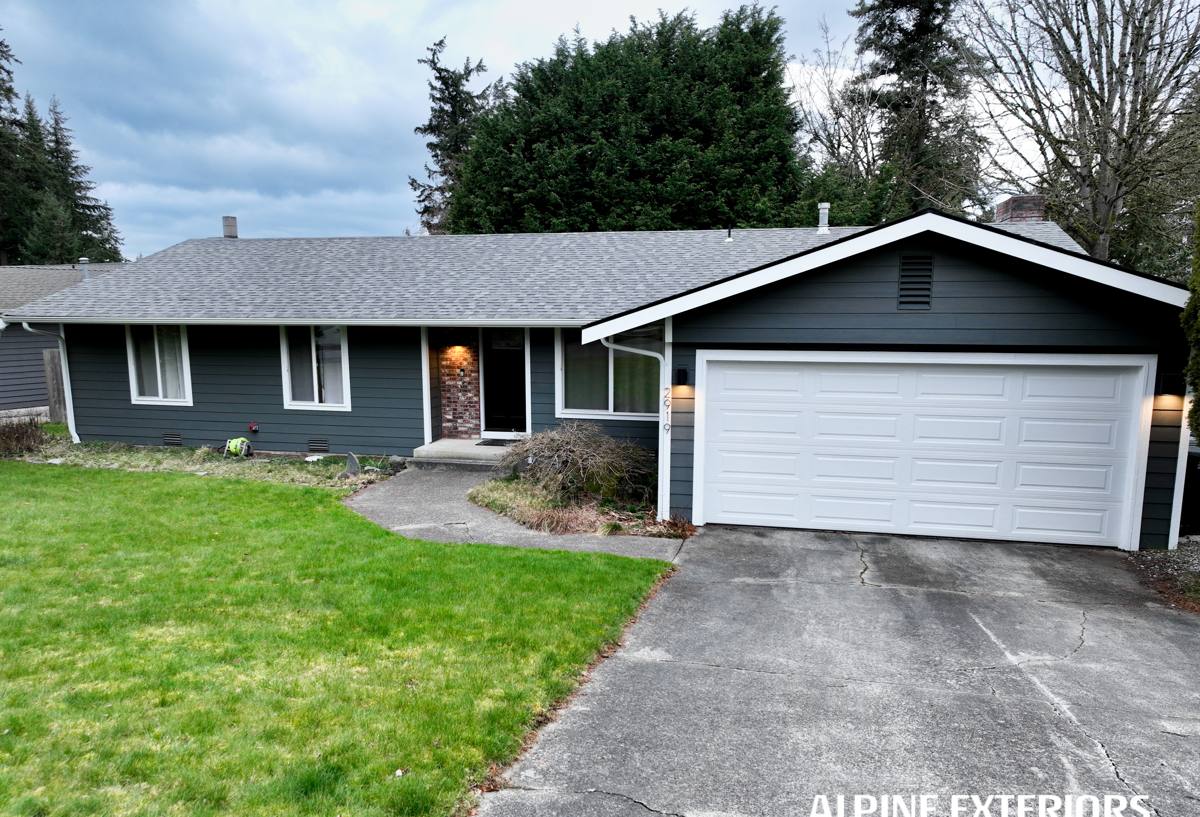
What Salt Air, Driving Rain, and Moss Actually Do to Siding
Each of these three factors attacks siding differently, and most siding products are only built to resist one or two of them well.
Salt Air
Airborne salt is corrosive to fasteners and trim hardware, and it accelerates the breakdown of paint films and coatings that aren't formulated to resist it. Over years, salt exposure shows up as chalking, fading, and premature coating failure on the sun and wind-facing sides of a home, even when the siding itself is structurally sound.
Driving Rain
Whatcom County storms frequently push rain sideways rather than letting it run straight down a wall. That means water gets forced into every horizontal lap, seam, and penetration point — around windows, at trim boards, behind fixtures. Siding that isn't installed with real water-shedding detail behind it, regardless of what the product is rated for, will eventually let moisture behind the cladding.
Long Moss Season
Shaded lots, tree cover, and near-constant moisture keep organic growth active on north-facing and low-airflow walls for much of the year. Moss and algae hold moisture against the siding surface longer than open sun-exposed walls ever see, which matters most for any siding material that can absorb water or swell when it stays wet.
Why We Install Only James Hardie Fiber Cement in This Neighborhood
We do not install vinyl, LP SmartSide, primed wood, cedar, or other fiber cement brands. That is a deliberate standard, not a sales pitch, and it matters more in Whatcom Falls than almost anywhere else we work.
- It doesn't rot or swell from moisture. Fiber cement is not an organic wood product, so the constant dampness from driving rain and moss cover doesn't cause the material itself to soften, delaminate, or swell at the edges.
- It's non-combustible. Hardie board is fiber cement, not wood or plastic, which matters for wildfire-adjacent insurance considerations that are increasingly relevant across Washington.
- ColorPlus factory finish holds up to salt and sun. The baked-on finish is engineered to resist fading and chalking better than field-applied paint, which is a real advantage on salt-exposed elevations.
- HZ5 product engineering fits this climate. Hardie's HZ5 line is specifically formulated for wetter, harsher climate zones like the Pacific Northwest, rather than a one-size-fits-all national product.
- The warranty is strong and transferable. That protects the investment for the current owner and adds real value if the home sells.
We're not going to pretend other products are worthless — vinyl is inexpensive and low-maintenance in mild climates, and cedar has genuine visual appeal. But vinyl can warp and gap at seams under sustained wind-driven rain, cedar demands ongoing sealing and refinishing that most owners underestimate, and LP SmartSide is an engineered wood product that depends entirely on flawless installation and caulking to keep moisture out — a hard standard to guarantee over decades in this climate. On a Whatcom Falls home, those trade-offs compound faster than they would somewhere drier and calmer.
What a Correct Siding Installation Actually Involves
The siding material is only part of the equation. Most siding failures we get called to inspect in this area trace back to installation shortcuts, not the product itself.
Water Management Comes First
Before a single piece of siding goes up, the wall needs a proper weather-resistive barrier, correctly lapped and taped, with flashing integrated at every window, door, and penetration so water is directed out and down — never trapped behind the cladding. In a driving-rain environment, this layer is doing more work than the siding itself.
Clearances and Gaps Matter
Hardie's own installation instructions specify minimum clearances from grade, roof lines, decks, and other siding terminations. Skipping these clearances is one of the most common causes of moisture intrusion and premature caulk failure we see on homes that weren't installed to spec — and it's also one of the most common ways a manufacturer's warranty gets voided.
Fastening and Fit
Fiber cement needs to be fastened correctly — proper fastener type, spacing, and depth — and cut and fitted tightly at joints without forcing the material. Rushed installs show up years later as nail pops, cracked corners, or open seams that let water behind the board.
Ventilation Behind the Cladding
A rainscreen gap or properly vented assembly lets any moisture that does get behind the siding dry out instead of sitting against the wall. On shaded, moss-prone walls, this drying capacity is what separates a wall system that lasts decades from one that develops hidden rot behind sound-looking siding.
Our Installation Process for Whatcom Falls Homes
- On-site assessment. We walk the home, check existing siding and sheathing condition, note shaded and salt-exposed elevations, and identify any moisture damage already present.
- Tear-off and sheathing inspection. Old siding comes off and the sheathing underneath gets inspected — this is often the first time hidden moisture damage becomes visible, and we address it before covering it back up.
- Weather-resistive barrier and flashing. A new barrier is installed and properly lapped, with flashing detailed at every window, door, and penetration.
- Hardie installation to manufacturer spec. Boards are installed with correct clearances, fastening, and joint treatment, following James Hardie's published installation requirements.
- Trim, caulking, and finish details. Trim work and sealant are completed at transitions and penetrations — the details that determine how the wall performs in driving rain, not just how it looks.
- Final walkthrough. We review the completed work with the homeowner and confirm everything meets both our standards and Hardie's warranty requirements.
Choosing the Right Hardie Line and Finish
Not every Hardie product or color is the right fit for every wall on a Whatcom Falls property. Shaded, north-facing walls that hold moss longer benefit from finish choices and detailing that account for that reality, while salt- and sun-exposed elevations get the most benefit from ColorPlus factory finishes over field-applied paint. We help homeowners think through lap siding versus panel systems, trim profiles, and color selection based on how each elevation of the home actually behaves — not just how it looks in a sample book.
Cost Factors for Whatcom Falls Siding Installation
Every home is different, but the following factors are what actually move the price on a siding installation in this area. We don't publish fixed per-square-foot numbers because wall condition, access, and scope vary too much to make that honest — a free on-site estimate is the only way to get a real number.
| Factor | Why It Affects Cost |
|---|---|
| Existing sheathing condition | Hidden moisture damage found during tear-off may need repair before new siding goes on |
| Home size and wall complexity | More corners, gables, and trim detail increase labor time |
| Number of stories and access | Taller walls and tight lot access require more staging and time |
| Product line and finish selection | Panel systems, trim profiles, and color options carry different material costs |
| Window, door, and penetration count | Each one requires flashing and trim detail that adds labor |
| Amount of tear-off required | Full removal of old siding versus a simpler re-side affects both time and disposal cost |
What to Ask Before You Hire a Siding Crew
Whatcom Falls' climate punishes shortcuts faster than milder areas, so vetting the crew matters as much as vetting the product. Before hiring anyone for a siding installation here, ask:
- Do you install to the manufacturer's published clearance and fastening specs, and can you show me those specs?
- What weather-resistive barrier and flashing detail do you use, and will I see that work before it's covered?
- Is a rainscreen or ventilation gap included behind the siding?
- Do you regularly work in this specific area, and do you understand its shade, moisture, and salt exposure?
- What does the manufacturer's warranty require to stay valid, and does your installation process meet those requirements?
- Will I get a written scope of work, not just a verbal estimate?
A crew that hesitates on these questions, or can't explain their water management approach in plain language, is a warning sign regardless of what brand name they're quoting.
Why Local Installation Experience Matters Here
A siding crew that regularly works Whatcom Falls already knows which elevations hold moss longest, which lots get hit hardest by driving rain, and how salt exposure shows up on finishes over time. That familiarity shapes real decisions — where extra flashing attention goes, which walls need the most ventilation consideration, how trim details get handled at grade. It's the difference between a generic installation and one built for the specific wall it's going on.
If you're planning a siding project in Whatcom Falls, we'd be glad to take a look at your home and walk you through what we'd recommend, with no pressure and no obligation. Request a free estimate using the form below.