 Glenhaven Siding
 Why Whatcom Falls Roofs Take a Different Kind of Beating
Whatcom Falls sits close enough to the water and the marine air pattern that comes with it that roofs here age differently than roofs even twenty miles inland. Three things are working against your shingles or shakes at the same time: salt-laden air that speeds up corrosion on flashing, fasteners, and metal valleys; driving rain that comes in sideways during winter storms and finds every gap a normal downpour would never reach; and a moss season that, in this part of Whatcom County, can run eight or nine months out of the year on north-facing and shaded slopes.
None of these alone would be a big deal. Together, they compound. Salt air corrodes fasteners faster, which loosens shingles, which gives wind-driven rain a way in, which feeds moss growth, which holds moisture against the roof deck even longer. A storm doesn't have to be dramatic to do real damage to a roof that's already been softened up by that cycle — a strong afternoon gust or a week of heavy rain is often enough to turn slow wear into an active leak.
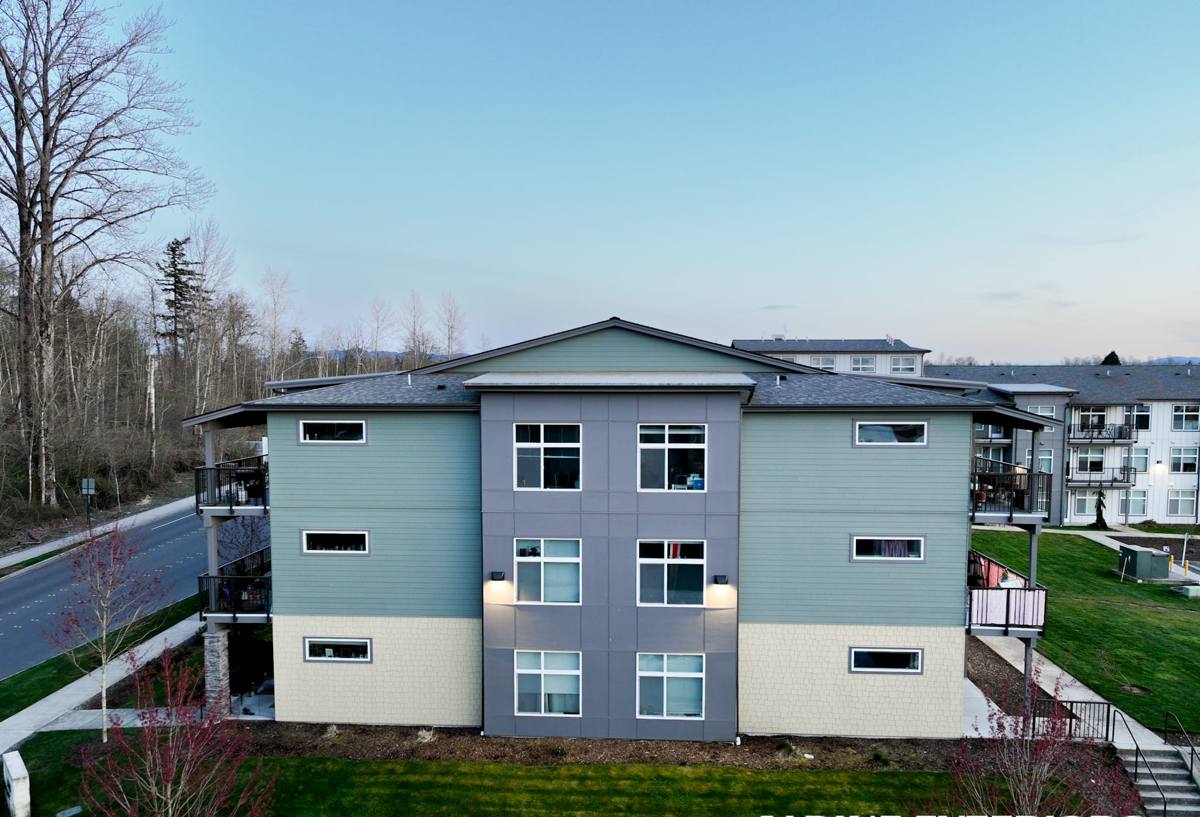
What Actually Counts as Storm Damage
Homeowners often picture storm damage as missing shingles scattered across the yard. That's the obvious kind, but it's not the most common kind we find on Whatcom Falls roofs. Here's what we're actually looking for during a storm damage inspection:
- Wind-lifted or creased shingles that look fine from the ground but have broken their seal and will leak the next time it rains
- Flashing pulled loose or bent around chimneys, skylights, and roof-to-wall transitions
- Fascia and gutter damage from falling branches, which is extremely common under the mature conifer cover typical of this area
- Granule loss on asphalt shingles from hail or wind-driven debris, which shortens the roof's remaining life even without an active leak
- Soft or spongy decking where storm moisture combined with existing moss-related rot found a weak point
- Displaced or cracked ridge caps, which are a common failure point in sustained high wind
Some of this is visible from the ground with binoculars. Most of it isn't. That's the reason a proper storm inspection means someone on the roof, not just a drive-by look.
How We Assess Storm Damage on Your Roof
We start with a full walk of the roof surface, not a partial look at whatever's visible from the driveway. That includes checking every penetration — vents, chimneys, skylights — since those are where storm-driven water most often gets in. We also check the attic or roof deck from inside where access allows, because water staining, damp insulation, or daylight through the decking tells us things the exterior alone won't.
We document what we find with photos and a written summary of exactly what's damaged, what's pre-existing wear, and what's actually storm-related. That distinction matters if you're filing an insurance claim — adjusters expect a report that separates the two, and a vague "the roof is damaged" summary tends to slow claims down or get partially denied. We give you something specific enough to use.
What We Won't Do
We won't tell you that you need a full roof replacement when a targeted repair will hold. Storm damage assessments get abused industry-wide — some crews use any storm as a reason to sell a full tear-off regardless of what's actually wrong. Our standard is to fix what's damaged, flag what's marginal and likely to fail soon, and leave the rest alone unless you ask us to look further.
Repair Approaches by Damage Type
Not every storm-damaged roof needs the same fix. The right approach depends on what's actually failed and how much of the surrounding material is still sound.
| Damage Type | Typical Repair | What Affects Scope |
|---|---|---|
| Isolated missing/lifted shingles | Spot replacement, re-sealing adjacent tabs | Age and brittleness of surrounding shingles |
| Flashing failure (chimney, valley, wall) | Remove and re-flash with new step or valley metal | Corrosion extent from salt air exposure |
| Granule loss / hail bruising | Section replacement or full slope depending on spread | Whether the mat underneath is compromised |
| Soft decking under a damaged area | Cut out and replace decking before re-roofing that section | How far moisture has traveled under the surface |
| Gutter/fascia damage from falling limbs | Section repair or full run replacement | Whether fascia board is also rotted underneath |
| Widespread wind damage across multiple slopes | Full re-roof may be the more cost-effective option | Total percentage of roof affected vs. remaining roof age |
As a rule of thumb, if storm damage is concentrated on one or two slopes and the rest of the roof is in reasonable shape, a targeted repair is usually the right call. When damage is scattered across the whole roof, or the roof was already near the end of its service life, a repair can end up costing nearly as much as doing the job right the first time — we'll tell you honestly which situation you're in.
Materials and Fastening for This Climate
Because of the salt air and near-constant moisture exposure, we don't just match whatever was there before without thinking about whether it was the right choice to begin with. Flashing and fasteners get corroded faster here than in drier inland parts of Washington, so where it makes sense we upgrade to corrosion-resistant flashing and fasteners rated for coastal-adjacent exposure rather than standard-grade material, even on a repair. It costs a little more up front and saves you from doing the same repair again in a few years.
Underlayment matters just as much as the visible shingles. In an area with this much wind-driven rain, a self-adhering underlayment at eaves, valleys, and around penetrations gives real protection against water that gets past the primary roofing layer — which happens more here than homeowners expect, storm or no storm.
Emergency Tarping and Temporary Protection
If a storm has left an active leak or exposed decking, the first priority isn't the permanent repair — it's stopping water from getting further into your home. We can install a temporary tarp or emergency covering to protect the interior while we assess the full scope and, if needed, work with your insurance timeline. This matters most during Whatcom County's wet season, when leaving an opening uncovered for even a day or two can mean the difference between a roof repair and a roof-plus-ceiling repair.
Moss: The Slow Storm Damage You Don't Notice
Moss doesn't blow in during a storm, but it sets your roof up to fail when a storm does hit. On shaded and north-facing slopes around Whatcom Falls, moss holds moisture against the shingle surface for months at a time, which lifts shingle edges, breaks down granule adhesion, and softens the decking underneath long before you'd see a leak. A roof carrying heavy moss growth going into storm season is simply more vulnerable to wind uplift and water intrusion than a clean one.
Part of a proper storm damage repair, especially here, is dealing with the moss contributing to the problem — not just patching the hole. That means safe removal (never pressure-washing shingles, which strips granules and does its own damage), treatment to slow regrowth, and a look at what's causing the moss in the first place, whether that's overhanging branches, poor airflow, or a north-facing slope that just doesn't get enough sun to dry out between rains.
Signs Your Roof Is More Storm-Vulnerable Than It Looks
- Moss or dark streaking concentrated on one or two slopes
- Granules building up in gutters even without a recent storm
- Shingle edges that look slightly curled or lifted at rest
- Rusty streaking below metal flashing or vent boots
- A roof over 15-18 years old that hasn't had a professional inspection recently
After a Storm: What to Do First
If you suspect storm damage, here's the order that actually protects you and your home:
- Do not get on the roof yourself — storm-damaged roofs are unstable and wet surfaces are dangerous even for experienced crews
- Photograph what's visible from the ground, including any debris in the yard that came off the roof
- Check the attic or top-floor ceilings for staining, dampness, or daylight
- Call for a professional inspection before you call your insurance company, so you know what you're actually reporting
- Get a written damage assessment you can submit with a claim if needed
- Address any active leak with temporary protection right away — don't wait for the permanent repair to be scheduled
Why a Crew That Already Works Whatcom Falls Matters
Storm damage repair is one of the few jobs where local knowledge genuinely changes the outcome. A crew that works Whatcom Falls regularly already knows which flashing details tend to fail first in this microclimate, how aggressive the moss growth gets on shaded lots, and what corrosion actually looks like after a few seasons of salt air rather than what a manufacturer's spec sheet says in ideal conditions. That's the difference between a repair that holds and one you're revisiting in two years.
It also matters for response time. After a widespread storm, roofing crews get booked out fast, and out-of-area contractors often can't get to smaller jobs quickly or don't know the area well enough to prioritize correctly. Working locally means we can usually get a temporary fix on your roof faster and schedule the permanent repair without the delays that come from a crew learning the neighborhood for the first time.
Get a Free, No-Pressure Estimate
If a recent storm has you wondering whether your roof took damage — visible or otherwise — we're glad to come take a look. There's no cost and no obligation, just a straight answer about what's actually wrong and what it will take to fix it right. Use the form below to get started.