 Glenhaven Siding
 Windows Built for the Puget Waterfront, Not Just Any Window
Puget sits close enough to the water that its homes take a different kind of weather beating than houses even a few miles inland. Salt-laden air moves off the bay and settles on everything it touches, wind-driven rain finds its way into gaps that would stay dry elsewhere in Whatcom County, and a wet season that stretches for months keeps siding, trim, and window assemblies damp far longer than manufacturers assume when they write their installation specs. A window that's rated fine for a dry inland climate can still fail early in Puget if it's not installed with this specific exposure in mind.
That's the core of what we do differently here: we don't treat window installation as a one-size-fits-all product swap. We treat it as a system — the window unit, the flashing, the sealants, and the surrounding wall assembly all have to work together to keep water out and let any moisture that does get in find its way back out again.
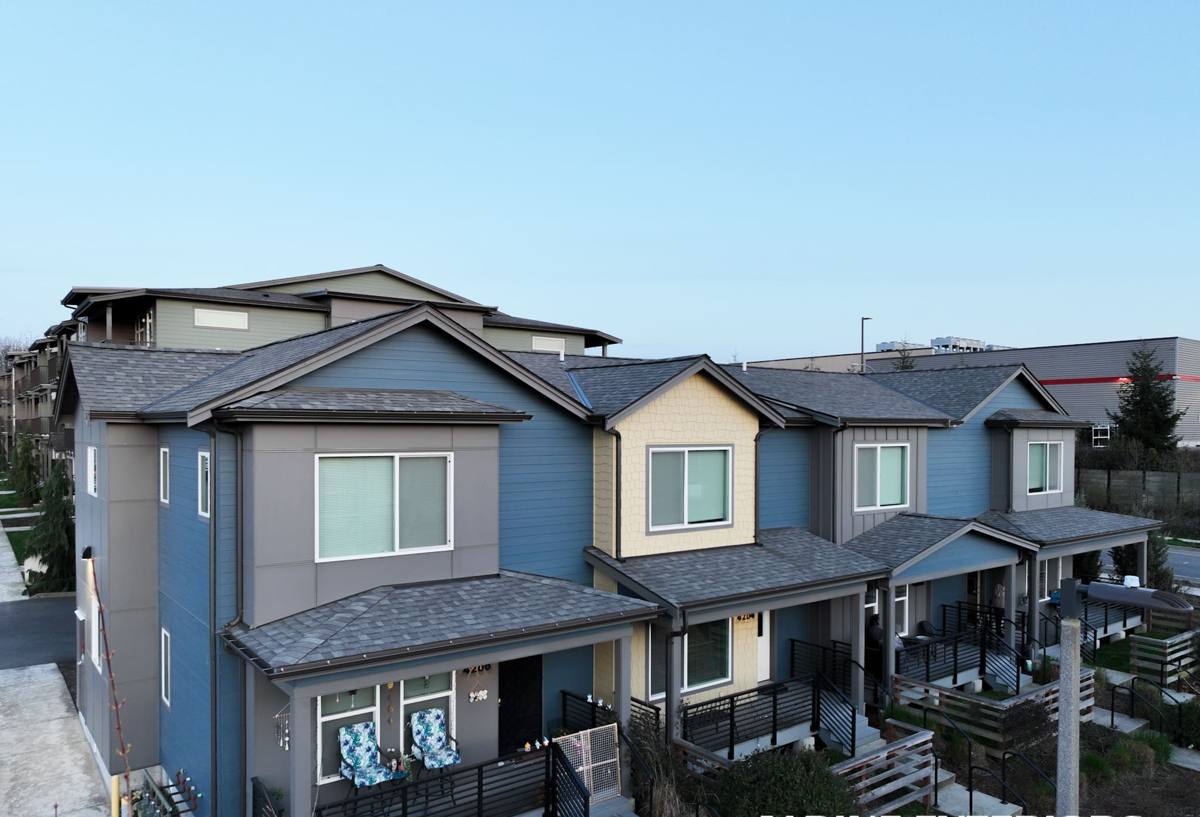
What Puget's Climate Actually Does to Windows
Salt Air and Metal Components
Coastal salt air accelerates corrosion on anything metal — screws, hinges, balance systems, and lower-grade cladding. Over years, corroded hardware is one of the most common reasons a window starts sticking, won't latch fully, or develops gaps that let water and air through. This is why hardware quality and cladding material matter more in Puget than they would on a home twenty miles inland.
Driving Rain
Rain that comes in sideways off the bay puts pressure on window openings in a way that straight-down rain doesn't. Water gets pushed up and under trim, into nail fin gaps, and behind poorly lapped flashing. A window can be perfectly good and still leak if the flashing and sill pan underneath it weren't detailed for wind-driven water.
Extended Moss and Damp Season
Whatcom County's long stretch of wet, low-sun months keeps wood trim, sills, and the wall cavity around a window damp for extended periods. Moss and algae growth on nearby siding and trim hold moisture against the wall longer. If a window opening can't dry out between rain events, rot in the surrounding framing is usually just a matter of time — often showing up years after installation, hidden behind trim.
What a Correct Installation Involves in This Area
A window installation done right for Puget conditions is not just "remove old window, set new window, caulk the edges." Every step below addresses a specific failure mode we see in coastal Whatcom County homes:
- Sill pan flashing — a sloped, waterproof pan under the window opening so any water that gets past the window has somewhere to drain instead of soaking into the framing
- Properly lapped house wrap and flashing tape — installed shingle-style (upper layers overlapping lower ones) so gravity and wind-driven rain can't work their way behind the barrier
- Corrosion-resistant fasteners and hardware — matched to salt-air exposure rather than standard-grade hardware that pits and seizes early
- Backer rod and low-expansion sealant at the right joints — not just a bead of caulk smeared over gaps, but a sealant joint sized and backed correctly so it flexes with temperature and moisture changes instead of cracking
- Insulation in the shim space — gaps around the window frame filled correctly so there's no cold spot that invites condensation on the interior
- Interior and exterior trim sealed as a system — so the whole assembly sheds water outward instead of trapping it
Skip any one of these and the window itself can be excellent and still underperform for the site.
Our Process for Puget Homes
1. On-Site Assessment
We look at more than the window opening itself — exposure to prevailing wind and rain direction, condition of the existing sill and framing, signs of past moisture intrusion, and how the home's overall siding and drainage plane are performing. This tells us what the opening actually needs, not just what's convenient to install.
2. Removal and Inspection
Old windows come out carefully so we can inspect the framing underneath before anything new goes in. This is often the first time hidden rot or past water damage becomes visible — better to find it now than to seal a new window over a problem.
3. Repair Framing if Needed
Any soft, rotted, or water-damaged framing gets repaired or replaced before a new window goes in. Installing a new window over compromised framing just delays the same problem.
4. Flash and Install
Sill pan, house wrap integration, and window installation happen in the sequence that keeps water moving outward at every layer, using fasteners and hardware suited to salt-air exposure.
5. Seal, Trim, and Test
Interior and exterior trim, insulation, and sealant joints are finished, and we check operation — smooth opening, closing, and full latch engagement — before we call the job done.
Choosing the Right Window for This Location
There's no single "best" window brand for every home — the right choice depends on your home's exposure, your budget, and how much long-term maintenance you want to take on. What we focus on for Puget specifically is how a window's frame material and hardware hold up to salt air and sustained moisture, since that's what separates a window that looks good for five years from one that performs well for twenty.
| Frame Material | How It Handles Coastal Exposure | Maintenance Consideration |
|---|---|---|
| Vinyl | Doesn't corrode or rot; performs consistently in salt air | Low — occasional cleaning, no painting |
| Fiberglass | Very stable in temperature swings and moisture; strong long-term performer near the water | Low — durable finish, minimal upkeep |
| Aluminum-clad wood | Attractive interior wood look, but cladding seams and any exposed wood need attention in salt air and damp conditions | Moderate — watch seams and touch up exposed areas |
| Bare wood | Classic appearance, but most vulnerable to rot and moisture damage in a coastal wet climate without diligent upkeep | High — regular painting/sealing required |
We'll walk through these trade-offs honestly based on your home, your budget, and how much maintenance you actually want to take on — there's no wrong answer, just the one that fits your situation.
Cost Factors for Window Installation in Puget
Every home is different, but the main things that move the price on a Puget-area window job are:
| Factor | Why It Affects Cost |
|---|---|
| Number and size of windows | More openings and larger units mean more material and labor |
| Framing condition | Rot or water damage found during removal adds repair work before installation can proceed |
| Frame material chosen | Vinyl, fiberglass, and clad-wood carry different material costs |
| Flashing and drainage detail complexity | Openings with tricky trim, siding transitions, or prior leak history need more careful detailing |
| Access and site conditions | Second-story or hard-to-reach windows take more time and equipment |
We give straightforward, itemized estimates so you can see exactly what you're paying for and why — no vague lump sums.
Why It Matters That We Already Work in Puget
A crew that installs windows across a wide mix of climates has to guess at what a given site needs. A crew that regularly works the Puget waterfront and the rest of Glenhaven already knows how the prevailing wind and rain hit homes in this specific area, which framing and flashing details actually hold up here, and what early warning signs to look for on a home that's been through a few wet seasons already. That local pattern recognition is what keeps a window installation from becoming a callback in three years.
Signs Your Current Windows Are Struggling With the Local Climate
- Fogging or condensation between glass panes (seal failure)
- Soft or discolored trim or sill wood around the window
- Windows that stick, won't latch fully, or feel drafty when closed
- Visible corrosion on hardware, hinges, or fasteners
- Musty smell or visible moss/mildew near the window opening
- Noticeably higher heating bills without another clear cause
Any one of these on its own isn't necessarily an emergency, but a home showing several of them is usually telling you the windows or their installation detail are falling behind what the local climate demands.
Let's Take a Look at Your Windows
If you're in Puget and dealing with drafty, foggy, or sticking windows — or you're planning ahead before the next wet season sets in — we're happy to come take a look. The estimate is free, there's no pressure, and you'll get a straight answer about what your home actually needs.